
The Ones Who Get Away Don't Always Get Away
FER played a show that most people missed. That's the last time that's going to happen.
By Stefanie Dietzel |
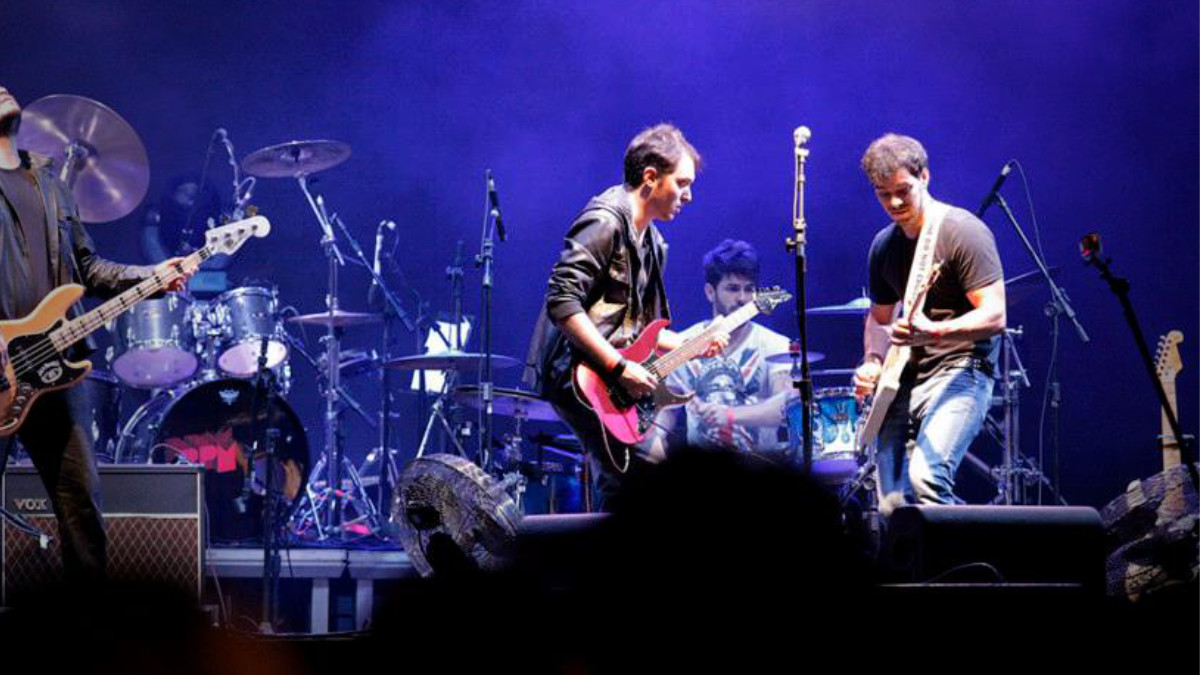
As someone who enjoys discovering new artists by randomly tumbling into concerts in my favourite five venues, I know how much of a gamble that can be. But there are some gigs where you feel a certain anticipation after only a few notes. Something's in the air. Sure, there’s always that almost polite appreciation for unknown artists, the somewhat borrowed excitement for an unknown supporting act. But I’m talking about something else. A recognition. The room feels different — quieter during songs, louder after them — and you notice people exchanging glances: who is this guy?
That was the energy in the room the night FER played.
The Dublin-based singer-songwriter walked out on stage with just his guitar and no unnecessary ado. He's built a loyal fanbase through live performance, not numbers on streaming platforms. And it shows in his stage presence and connection to the audience — which immediately spilled over to the ones who, like me, came to see his show out of sheer curiosity.
Already the opening of his first song "Walk Ahead of the Sun" had me hooked. There's something unmistakably Britpop about it — not in the way that tries to emulate and milk on that nostalgia, but in that it channels the spirit of the mid-Nineties when guitar bands genuinely believed they could fill stadiums. And did. Oasis is an obvious reference here, but there's also a modernity, a freshness to the track. As if someone grew up listening to Morning Glory and then kept absorbing another twenty years of music without losing what made those records feel compelling in the first place. The chorus hit and three people near me started nodding like they've already decided they're going to find this on Spotify the moment they get home.
Then came "Just Another Pawn," and the tone shifted entirely. Where "Walk Ahead of the Sun" is wide and anthemic, "Just Another Pawn" feels coiled and a bit menacing in the best sense — like an early Stone Temple Pilots' song that is barely containing itself. The guitar is thicker, the rhythm more insistent, and half way through the song unexpectedly opens up. I read a critic once described it as having a "mini-Beatles A Day in the Life" quality to it. And while that's quite a risque comparison, it actually checks out. There's a theatrical intelligence to the arrangement that shows careful consideration of how a song moves through time, not just how it sounds.
The moment of the night was "Having a Good Time."
On the danger of sounding hackneyed, but there was this immediate feeling of familiarity. Standing there, watching FER play, I found myself genuinely wondering, Is this a cover? The song felt familiar — a deja-écoute, if you will — creating the illusion that it already existed somewhere in my memory before I ever even heard it. And that requires skill.
The track has a looseness to it that contrasts with the more polished rock cuts, and it arrived mid-set like a gear change that felt like a breath of fresh air. The crowd moved slightly closer to the stage, completely emerging in the moment.
After that, FER slowed things down without losing attention — which is honestly not the easiest thing to do. Ballads timed wrong have the unfortunate tendency of giving people permission to check their phones. "You Probably Know" though, did not. The song’s delicate and genuinely vulnerable in its vocal delivery. It settled over the room in a way as if the audience had been waiting for it. There's a rawness to FER's voice in those quieter moments — slightly hoarse, grainy even — that recalls Paolo Nutini beyond simple imitation. It's the sound of a singer who's not managing himself, who's not protecting anything.
The set closed with "You've Got to Try," — a song that keeps on building, is expansive, almost orchestral in its ambitions even in a stripped-back live setting, ending the evening somewhere between catharsis and a declaration. People didn't want to leave, which is the only metric for a closing song that matters.
What makes FER interesting beyond any individual song is the variety across his arrangements. And taking a closer look behind the scenes, you’ll find that he independently produces and arranges all of his material. Yet what you hear isn't the rough-around-the-edges charm of a bedroom project, but festival and radio-ready songs of someone who knows exactly how they want to sound like and how to get there. The tracks are finished.
FER is currently recording a self-titled album — described as "the festival main stage" version of his sound; louder and more electric, a record built for crowds. And if his live set is any indication of what's coming, the reviews are going to write themselves.
For now, he's still a name you don't quite know, someone you might stumble over at your favourite off-venue. I have a feeling that won’t be the case for long. So find a show, bring a friend, and listen closely.
FER's self-titled album is currently in recording. His music is available on Spotify, Apple Music, and all major platforms. Follow him on instagram at @fer.tune or fermusic.net.